
A small living room can still feel comfortable, welcoming, and stylish with the right layout and decorating choices. Even when space is limited, thoughtful furniture placement, suitable lighting, and organized surfaces can make a room feel more open without requiring major renovations.
Creating a spacious atmosphere does not necessarily mean removing everything or buying new furniture. Often, small adjustments to the way you arrange and decorate your living room can make a noticeable difference. By focusing on function, visual balance, and natural light, you can create a space that feels easier to move around in and more enjoyable to use.
1. Choose Furniture That Fits the Room
Furniture has a significant effect on how spacious a living room feels. Oversized sofas, bulky chairs, and large tables can make a compact area feel crowded, especially when they block walkways or take up too much floor space.
Before purchasing new furniture, measure your room and consider how much space each piece will occupy. Choose furniture that allows people to move comfortably between seating areas, doorways, and other parts of the room.
Furniture with raised legs can also help create a lighter appearance because more of the floor remains visible underneath. If your living room is particularly small, consider a compact sofa, nesting tables, or a storage ottoman that serves more than one purpose.
2. Use Light Colors to Create an Open Feel
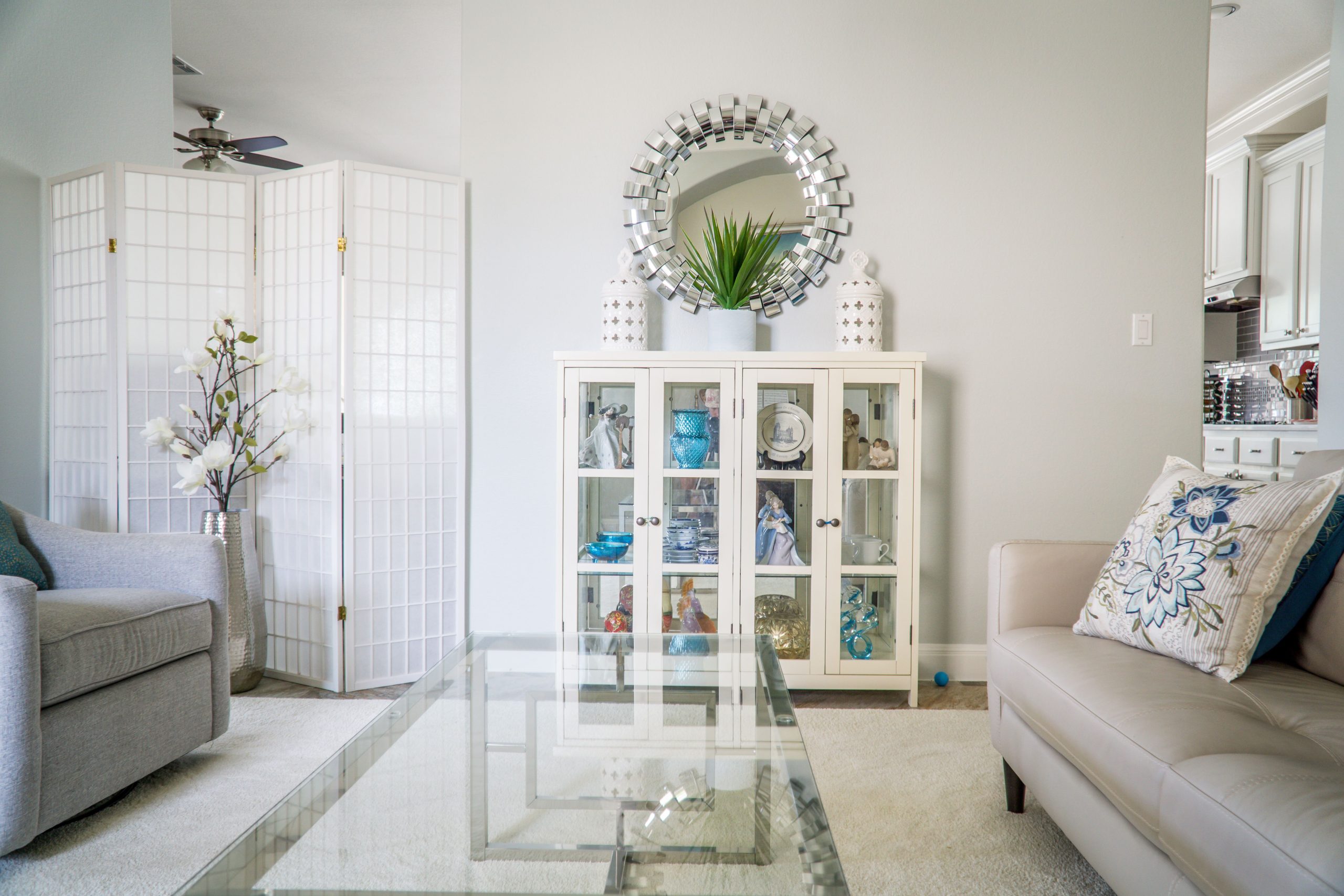
Light colors can help a small living room appear brighter and more open. Shades such as white, cream, beige, and soft gray reflect light and create a calm background for furniture and decorative accents.
You do not need to make the entire room one color. Instead, use a consistent base palette for the walls, larger furniture pieces, and curtains, then introduce contrast through cushions, artwork, rugs, or smaller accessories.
If you prefer darker or richer colors, use them selectively rather than covering every surface with deep shades. A balanced color scheme can add personality without making the room feel visually crowded.
3. Make the Most of Natural Light
Natural light can make a living room feel more open by brightening corners and reducing the appearance of enclosed spaces. Keep windows as unobstructed as possible and choose curtains that allow daylight to enter when privacy permits.
Lightweight curtains in colors that complement the walls can help create a continuous visual line. Hanging curtain rods slightly higher than the window frame may also draw the eye upward, making the room appear taller.
Avoid placing large furniture directly in front of windows if it blocks much of the incoming light. If natural light is limited, use a combination of floor lamps, table lamps, and other suitable lighting to brighten darker areas.
4. Keep Walkways and Surfaces Clear
Clutter can make even a well-designed living room feel smaller. When too many objects occupy tables, shelves, and walking areas, the room becomes harder to navigate and may appear less organized.
Start by removing items that do not belong in the living room or that you rarely use. Give everyday belongings a designated place so they can be put away easily instead of collecting on coffee tables and seating areas.
Storage baskets, decorative trays, and compact organizers can help keep small items together. Try to leave some open space on shelves and tables rather than filling every available surface. A few carefully chosen decorations can have more impact than a large collection of unrelated objects.
5. Use Mirrors and Decor Strategically
Mirrors can help a small living room feel brighter by reflecting light and creating a greater sense of depth. Placing a mirror opposite or near a window may help distribute natural light throughout the room.
Choose a mirror that suits the scale of your space. A large mirror can become a focal point, while a smaller design may work better above a console table or beside a decorative arrangement.
Other decorative accents should also be selected with care. A simple vase, a small plant, or a piece of wall art can add character without taking up valuable floor space. Avoid displaying too many large accessories in one area, as they can compete for attention and make the room feel busy.
6. Take Advantage of Vertical Space
When floor space is limited, using the walls can help keep the room organized while adding visual interest. Wall-mounted shelves, tall bookcases, and vertical artwork can draw attention upward instead of making the room feel crowded at ground level.
Use shelves to display books, small plants, framed photographs, or a few decorative objects. Keep heavier items stored securely and avoid overfilling the shelves, as crowded displays can make the room appear cluttered.
Tall curtains and vertical design elements can also emphasize the height of the room. The key is to use vertical space thoughtfully while maintaining enough open areas to keep the overall design balanced.
Create a Living Room That Feels Open and Comfortable
Making a small living room feel more spacious is about balancing practical needs with thoughtful design. Furniture that fits the room, a light and consistent color palette, clear walkways, and carefully chosen decorative accents can help create a more open atmosphere without requiring a complete makeover.
Start with one or two changes that address your biggest challenges, such as rearranging furniture or clearing crowded surfaces. Over time, these small improvements can help your living room feel more organized, functional, and inviting.
Explore Next Home Supply for home decor, lighting, organizers, and decorative accessories to help you create a living room that feels comfortable and works well for your space.


0 Comments